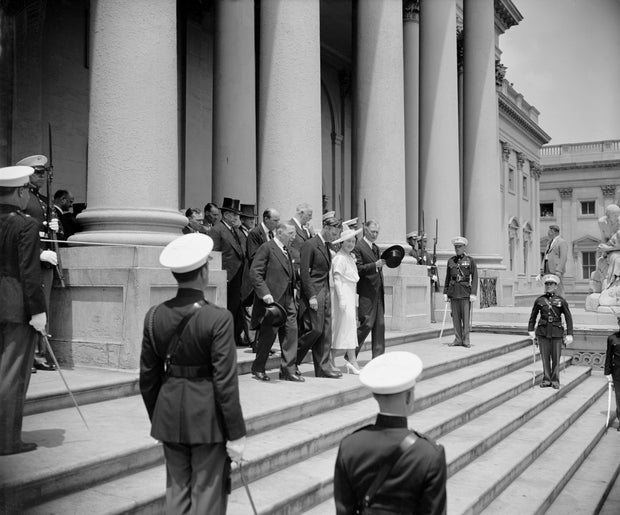
Photographs don’t just capture faces—they preserve diplomacy, style, and shifting alliances. When British royals step onto American soil, the images that follow become cultural artifacts, reflecting not just personal moments but the evolving relationship between two powerful nations. As King Charles III embarks on a state visit to the United States, the spotlight returns to decades of royal presence on U.S. soil—moments that have been documented in iconic photographs, each telling a story of protocol, charm, and soft power.
These visits are rare. The U.S., a republic born from rebellion against monarchy, rarely hosts state visits from the British Crown. Yet when they happen, they’re carefully choreographed, widely covered, and deeply symbolic. The photos that emerge—from handshakes with presidents to casual walks through American cities—offer a visual timeline of Anglo-American diplomacy.
The Weight of a Royal Visit to the U.S.
State visits by British monarchs to the United States are exceptional, not routine. Unlike other nations where royal tours are frequent, the U.S. has hosted reigning British sovereigns only a handful of times. Each instance carries symbolic weight: a nod to shared history, wartime alliance, and cultural kinship, despite the revolutionary roots that separate them.
The rarity makes the photographs from these visits all the more significant. A snapshot of Queen Elizabeth II reviewing troops at Arlington Cemetery or King Charles III walking through a Midwestern cornfield isn’t just a moment in time—it’s a political gesture, a media narrative, and a public relations triumph.
Historically, these visits serve multiple purposes: - Strengthening diplomatic ties during critical global moments - Humanizing the monarchy to a skeptical or indifferent public - Reinforcing the “special relationship” between the UK and U.S.
And through it all, cameras have been present—documenting everything from grand state dinners to impromptu smiles at schoolchildren.
Queen Elizabeth II: The Most Documented Royal Visitor
No British monarch has been photographed as extensively in the U.S. as Queen Elizabeth II. Her visits spanned six decades, each one marked by evolving media coverage and public perception.
1957: The First Reigning Monarch to Visit
The Queen’s first official visit to the U.S. in 1957 was groundbreaking. She became the first reigning British monarch to set foot on American soil. Photographs from that trip show her in Washington, D.C., laying a wreath at the Tomb of the Unknown Soldier, meeting President Dwight D. Eisenhower at the White House, and attending a state dinner under glittering chandeliers.
One iconic image—her waving from the balcony of the British Embassy—was widely circulated in newspapers. It was a moment of pageantry and peace, a visual reassurance of post-war alliance.
1976: Bicentennial Diplomacy
The 1976 visit was perhaps the most symbolically rich. The U.S. was celebrating its 200th birthday, and the Queen’s presence—on a frigate sailing up the Potomac River—was a deliberate act of reconciliation and respect.
Photos from that trip are striking: the Queen in a powder-blue coat and hat, smiling as she’s greeted by President Gerald Ford. Another shows her touring Colonial Williamsburg, engaging with reenactors in 18th-century dress—a subtle nod to the complex history between the two nations.
This visit was masterfully staged for optics. The monarchy, often seen as a relic, was shown as adaptable, respectful, and present.
1991 and Beyond: War, Grief, and Resilience
During the Gulf War in 1991, the Queen made a brief but poignant visit to thank U.S. troops. The photos are more somber—her in a dark coat, placing a wreath at the Vietnam Veterans Memorial. It was a quiet moment of solidarity, stripped of fanfare.
Later visits in 2007 and 2010 were less about politics and more about legacy. The 2007 trip included a visit to Jamestown, the first permanent English settlement in America. The imagery—Elizabeth standing beside President George W. Bush near a reconstructed fort—connected past to present.
Throughout her reign, the Queen’s U.S. photos followed a pattern: composed, dignified, and always on message. She never let a frame go to waste.
Prince Charles Before the Crown: A Frequent Visitor
:max_bytes(150000):strip_icc():focal(728x275:730x277)/princess-catherine-prince-william-donald-trump-king-charles-iii-trump-state-visit-uk-windsor-091725-8672599a27214b6f8ffdbb07fd7596e4.jpg)
Long before becoming King Charles III, Charles was the royal most familiar to American audiences. He visited the U.S. over 20 times as Prince of Wales, each trip generating its own visual narrative.
Environmental Advocacy and Public Engagement
Photos of Charles in the U.S. often show him at environmental events—planting trees, touring organic farms, or speaking at sustainability forums. These images, more casual than state visit photography, helped shape his public identity as a thoughtful, if eccentric, advocate.
One notable moment: his 1993 visit to New York, where he toured a community garden in Harlem. The photos—Charles crouched beside raised beds, speaking with residents—were widely shared. They countered his sometimes-stiff royal image with authenticity.
Controversy and the Diana Years
The 1990s brought complex optics. During the collapse of his marriage to Princess Diana, Charles’s U.S. visits were scrutinized. Paparazzi photos—some unflattering—followed him through airport terminals and hotel exits.
Yet official photography remained tightly controlled. Images from state functions show him in tuxedos, shaking hands with senators, attending galas in Boston and Chicago. The contrast between public perception and official portrayal was stark.
These photos, viewed today, reflect a man navigating personal turmoil under global scrutiny—a narrative that continues to echo in his reign.
King Charles III’s State Visit: A New Chapter
As King Charles III makes his first state visit to the U.S., the photographic stakes are high. This is not just a diplomatic event—it’s a branding moment for a monarchy in transition.
What the Photos Are Saying Now
Early images from the visit show Charles and Queen Camilla at the White House, attending a state dinner hosted by President Joe Biden. The visuals are deliberate: Charles in full military uniform, Camilla in a shimmering gown, Biden laughing during a toast. These are images designed to project stability, continuity, and warmth.
But beyond the formal shots, the candid moments matter. A photo of Charles pausing to speak with a veteran at a memorial event. Camilla bending down to chat with a young Girl Scout. These small gestures, captured in candid angles, humanize the monarchy in ways official portraits cannot.
The Role of Social Media
Unlike past visits, this one unfolds in real time. The Royal Family’s official accounts post curated photos within minutes. Journalists and citizens share unfiltered glimpses. The narrative is no longer controlled solely by press offices—every smartphone is a potential lens.
This changes the game. A single viral photo—Charles looking tired, Camilla making a face, a wardrobe mishap—can shift public perception faster than any press release.
Still, the royal team is experienced. Every outfit, handshake, and backdrop is chosen with photo potential in mind. The goal: timeless images that will be republished for decades.
Other Royals Who’ve Left Their Mark on U.S. Soil
While the monarch and heir dominate headlines, other royals have made notable U.S. appearances—each leaving behind a visual legacy.
Prince William and Kate Middleton: Modern Royalty
The Duke and Duchess of Cambridge have visited the U.S. multiple times. Their 2011 tour—shortly after their wedding—generated enormous media attention. Photos of them walking through Central Park, attending a polo match in Kentucky, and meeting Michelle Obama at the White House painted a picture of youthful, approachable monarchy.
A particularly memorable image: Kate in a red dress, laughing at a reception in California. It was shared millions of times, cementing her status as a global style icon.
Their 2022 visit focused on environmental and mental health initiatives. Photos from a community garden in Boston showed William getting his hands dirty—literally. These images were carefully aligned with their advocacy work, proving that royal photography can serve both PR and policy goals.
Prince Harry: From Military Hero to Royal Rebel
Harry’s U.S. presence has evolved dramatically. Early photos—him in Army uniform at the Pentagon or playing wheelchair basketball with veterans—showcased his military service and compassion.
Later images, post-Megxit, tell a different story. Paparazzi shots of him in California, often with Meghan and their children, project a life outside the institution. The contrast is intentional: one royal choosing privacy over protocol.

Now, as he promotes his memoir and advocacy work, every public appearance is photographed with added scrutiny. The optics matter—not just for him, but for the monarchy’s future.
The Power of the Frame: What Royal Photos Reveal
Royal visit photography is never accidental. Each image is a strategic choice—about location, expression, clothing, and timing.
Consider the symbolism: - White House gardens = tradition, diplomacy - School visits = accessibility, future-focused - Military memorials = respect, shared sacrifice - Casual walks = relatability, warmth
Even the weather plays a role. Rain during a public appearance can signal perseverance (if handled well) or misfortune (if not). Sunshine equals goodwill.
And then there’s the human element. A genuine smile, a moment of laughter, a hand on a child’s shoulder—these are the images that endure. They bypass politics and speak directly to emotion.
Behind the Lens: How Royal Photos Are Made
The process behind these images is meticulous. A royal visit involves: - Pre-visit reconnaissance by royal photographers - Coordination with U.S. Secret Service and military bands - Lighting checks, backdrop testing, and wardrobe approvals - Multiple camera angles for every major moment
The Royal Collection Trust archives many of these images, ensuring long-term access. But in the digital age, the first wave of photos comes not from official outlets, but from journalists and social media.
This dual stream—controlled and organic—creates a richer, more complex narrative. One that includes both the polished state dinner photo and the unguarded moment when Charles adjusts his collar mid-speech.
A Legacy in Images
As King Charles III’s state visit unfolds, the photographs being taken today will join a nearly century-long visual archive. They will be studied, shared, and remembered—not just as records of a trip, but as markers of a relationship.
From Elizabeth’s regal waves to Charles’s earnest handshakes, from William’s garden work to Harry’s California exit, these images chart the monarchy’s evolving role in a republic that once rejected kings.
And in the end, that’s the power of the photograph: it shows not just who the royals are, but how they want to be seen—and how we, in turn, choose to remember them.
For those following the visit, the lesson is clear: watch the photos closely. They’re not just documentation. They’re diplomacy in high resolution.
Common Mistakes in Interpreting Royal Visit Photos
- Assuming spontaneity: Most moments are staged or prompted
- Overreading expressions: Fatigue can look like displeasure
- Ignoring context: A location choice may carry historical weight
- Missing the team: Royal visits involve dozens of staff behind the scenes
Practical Tips for Following Royal Visit Coverage
- Compare official royal photos with press agency shots (AP, Reuters)
- Note wardrobe choices—they often reflect local culture or cause
- Watch for recurring themes: environmentalism, military ties, education
- Avoid viral edits or cropped images that distort intent
FAQ
Why are British royal visits to the U.S. so rare? Because the U.S. is a republic with no formal ties to the monarchy. State visits are reserved for close allies and carry symbolic weight, so they’re infrequent and carefully timed.
Has King Charles III visited the U.S. before as monarch? No, this is his first state visit as king. He visited frequently as Prince of Wales, but his current trip marks a new diplomatic role.
Who was the first British monarch to visit the U.S.? Queen Elizabeth II was the first reigning monarch to make an official visit in 1957.
How are royal visit photos selected for release? The Royal Communications team works with official photographers to choose images that reflect the tone and goals of the visit—dignity, engagement, and diplomacy.
Do royal family members take their own photos? Rarely during official events. Personal moments may be shared from private devices, but public photography is handled by professionals.
What role does the media play in shaping the narrative? Hugely. While official photos set the tone, press coverage and social media can amplify or challenge the intended message.
Are these visits expensive for U.S. taxpayers? Minimal cost. Security is integrated with existing protocols, and events are often funded by host organizations or private donors.
FAQ
What should you look for in Royal Moments: British Monarchs in America Through Photos? Focus on relevance, practical value, and how well the solution matches real user intent.
Is Royal Moments: British Monarchs in America Through Photos suitable for beginners? That depends on the workflow, but a clear step-by-step approach usually makes it easier to start.
How do you compare options around Royal Moments: British Monarchs in America Through Photos? Compare features, trust signals, limitations, pricing, and ease of implementation.
What mistakes should you avoid? Avoid generic choices, weak validation, and decisions based only on marketing claims.
What is the next best step? Shortlist the most relevant options, validate them quickly, and refine from real-world results.